Replacing a phone system is one of those projects that looks simple from the outside. You already pay for Microsoft 365, Microsoft Teams is already open on every desk, and Teams can already make calls. Switching the desk phones off starts to look like a licensing decision rather than a project.
It is not quite that simple, and the gap between “Teams can make calls” and “Teams is our phone system” is where most of the cost and most of the risk sits. This guide covers what a Microsoft Teams phone system actually is, the three ways an Australian business can connect it to the public phone network, what happens when someone dials 000, and when we would tell you to leave your existing system alone.
What is Microsoft Teams Phone?
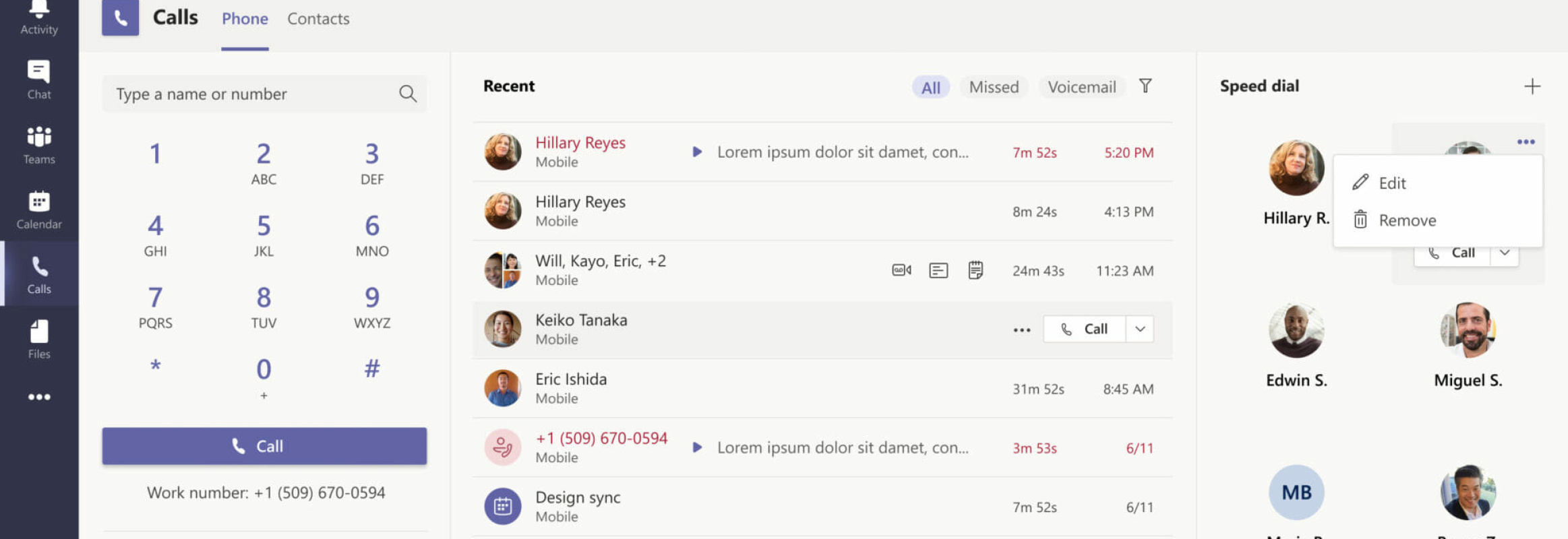
Teams Phone is a cloud PBX built into the Microsoft Teams app you already use. It gives you what a phone system does: inbound and outbound calls to real phone numbers, transfers, hold, call queues, auto attendants, voicemail, call recording and reporting.
Microsoft has renamed it more than once, which is why the same product turns up as Teams Calling, Teams telephony, Business Voice and a Microsoft Teams phone system. They all describe the same capability, and if you are comparing quotes from different providers it is worth checking they are quoting on the same thing.
The difference from a traditional PBX is that there is no box in a comms cupboard and no fixed relationship between a person and a desk. A user’s number follows their Teams account, so the same number rings on their laptop, their mobile and a desk handset if they have one. For a business with people moving between sites, working from home some days, or out on the road, that is the main practical gain.
Microsoft Teams calling between colleagues has always been free and built in. Teams Phone is what extends that to the outside world.
The part most people miss: the licence is not the phone service
This is the single most common misunderstanding we see, and it is worth being precise about because it drives the budget.
A Teams Phone licence gives you the PBX. It does not give you a connection to the public phone network. Those are two separate purchases, and you need both.
It also is not included in the Microsoft 365 plans most Australian small and mid-sized businesses run on. Business Basic, Business Standard and Business Premium all exclude it. Teams Phone is an add-on licence per user, or it comes bundled inside Microsoft 365 E5 if you are on that plan. So a business on Business Premium moving to Teams Phone is adding a per-user licence cost on top of what it already pays, then adding a calling service on top of that.
Once you have the licence, you choose how calls actually reach the phone network. In Australia there are three options, and the choice matters more than most vendors let on.
Connecting Teams to the phone network: your three options
Microsoft Calling Plan
Microsoft is your telco. You buy the calling minutes and the phone numbers from Microsoft alongside the licence, in the same bill, through the same admin centre.
It is the simplest option to set up and the easiest to explain to a board. The trade-off is flexibility: you get Microsoft’s plans and Microsoft’s numbers on Microsoft’s terms, which can be limiting if you have unusual numbering, existing carrier contracts, or sites that need something specific.
Operator Connect
An Australian carrier remains your telco, but their service plugs directly into Teams. Numbers are provisioned into your tenant by the carrier from the Teams admin centre, without you building anything.
For most businesses in the 30 to 80 user range this is the option we recommend looking at first. You keep a local carrier relationship, local support and local commercial terms, without the engineering overhead of the third option.
Direct Routing
You connect your own carrier to Teams through a Session Border Controller, either one you run or one your provider hosts. This gives you the most control and it is the only option that comfortably handles the complicated cases: keeping an existing SIP trunk contract, integrating with a legacy PBX during a staged migration, unusual dial plans, analogue devices such as lift phones and duress alarms, or multi-site arrangements that need specific routing.
It is also the most work. There is real design and ongoing operational responsibility in a Direct Routing deployment, and it is the option where an unmanaged setup will quietly cause problems eighteen months later.
Which one to choose
| Microsoft Calling Plan | Operator Connect | Direct Routing | |
|---|---|---|---|
| Who is your telco | Microsoft | Your Australian carrier | Your Australian carrier |
| Setup effort | Lowest | Low | Highest |
| Needs an SBC | No | No | Yes |
| Keep an existing carrier contract | No | If they participate | Yes |
| Handles analogue devices and legacy PBX | No | Limited | Yes |
| Best suited to | Simple single-site setups | Most mid-sized businesses | Complex or multi-site operations |
There is a fourth option, Teams Phone Mobile, where your mobile number becomes your Teams number through a participating carrier. It suits businesses whose people genuinely live on mobiles, and it is worth asking about if that describes your field teams.
Calling 000 from Teams Phone in Australia
This section exists because it is the part of a Teams Phone migration most likely to be skipped, and it is the part with actual consequences.
Australian carriage service providers operate under the Telecommunications (Emergency Call Service) Determination 2019. They must give you access to the emergency call service on 000 and 112, carry the call to the emergency call person (Telstra answers 000 and transfers to police, fire or ambulance), and supply the operator with the best available location information for the service.
For a traditional PBX, “best available location information” was straightforward. The desk phone was bolted to a known building. For a softphone that follows a person between the office, home and a customer site, it is not straightforward at all.
Here is the specific thing Australian businesses need to know. Microsoft publishes how emergency call routing works country by country, and for Australia its documentation states that emergency addresses are configured and routed by the carrier partner. That is different from the way it works in some comparable markets. In Canada and New Zealand, for example, Microsoft’s documentation describes emergency calls being screened to determine the caller’s current location before routing. Australia is a carrier-configured market, so what happens on a 000 call depends on your carrier and how your service was set up, not on a Microsoft default.
The practical consequences:
- A user working from home may present the registered office address to the 000 operator, because that is the address associated with their number.
- Dynamic location, where Teams works out where a user is from the network they are connected to, has to be deliberately configured. It relies on an administrator mapping subnets, wireless access points, switches and ports to validated, geo-coded emergency addresses. It does not happen on its own, and a home broadband connection provides none of the network identifiers it depends on.
- A generic head office address assigned to everyone is unsafe the moment you have a second site.
- Teams Phone depends on power and internet. A traditional line often survived an outage that will take a cloud phone system down, so critical sites need a deliberate fallback.
None of this is a reason to avoid Teams Phone. It is a reason to make emergency calling a written requirement rather than an assumption. Before you sign, get your carrier to confirm in writing whether 000 is enabled for your numbers, whether emergency addresses are set per user, per number or per site, whether dynamic location is supported on your specific deployment, and what address is presented when a user is away from the office. Then set accurate addresses for every site, and tell your staff to state their exact location to the operator regardless of what the system is expected to send.
Can you keep your existing phone numbers?
Yes, in almost all cases. Australian local number portability means you can bring your existing numbers across, and for most businesses that is non-negotiable because the numbers are on vehicles, signage and ten years of documents.
Two things worth planning for. First, porting is the step most likely to hold up a cutover, particularly where numbers sit across multiple carriers or in an old block nobody has touched for years. Start it early and treat the port date as the real project deadline. Second, if you are using a Microsoft Calling Plan, an emergency address has to be registered against a number when you acquire it from Microsoft or when it ports in, so the emergency address work happens during the port rather than after it.
Where a number cannot port cleanly, the usual fallback is diverting the old service to a new number for a period while you update everything that references it. That works, but it is an ongoing cost until you can retire the old service.
What does Teams Phone cost?
We are not going to publish a per-user figure, because Microsoft’s pricing varies by agreement type and billing term and any number we print here would be wrong within months. Microsoft directs customers to the Microsoft 365 admin centre for the price that applies to their tenant, which is the right place to check.
What is more useful is knowing everything that goes into the number, because the licence is usually the smallest part:
- The Teams Phone licence, per user, per month, unless you are on E5.
- The calling service: a Microsoft Calling Plan, or the carrier’s charges under Operator Connect or Direct Routing.
- Phone numbers, and any porting fees.
- Handsets, if you need them, plus headsets for people who do not.
- An SBC, if you go down the Direct Routing path.
- The project itself: call flow design, auto attendants, queues, emergency addresses, testing and training.
The saving, where there is one, usually comes from retiring the old PBX, its maintenance contract and its separate line rental, not from the licence being cheap. Businesses that budget only for licences are the ones that get a surprise.
Do you still need desk phones?
Most people do not. A good headset on a laptop is a better experience than a desk handset for anyone who spends their day in Teams anyway.
The exceptions are real, though. Reception desks, warehouses, workshops, meeting rooms, lifts and any shared area where a phone belongs to a place rather than a person all still want a physical device. Certified Teams handsets exist for exactly these cases. Analogue devices such as lift phones and alarm diallers are a separate problem, and they are one of the main reasons a business ends up on Direct Routing.
When Teams Phone is the wrong answer
We sell and support Teams Phone, and we still talk businesses out of it a few times a year. It is the wrong move when:
- You run a contact centre. Teams Phone has queues and reporting, but it is not a contact centre platform. If you need skills-based routing, workforce management or detailed agent analytics, you want a proper contact centre product, several of which integrate with Teams.
- Your internet is not up to it. Voice is unforgiving about jitter and packet loss in a way that email and file sync are not. If a site is on a marginal connection, fix the connection first or the phones will be blamed for it.
- You are mid-contract on a phone system that works. Paying out a contract to move to a platform that costs more per user is hard to justify on its own. Time the move with the contract or with a site move.
- Nobody will own it. Teams Phone is a system that needs someone to maintain call flows, starters and leavers, and emergency addresses. Deployed and abandoned, it degrades.
Frequently asked questions
Can Microsoft Teams replace my phone system entirely?
For most businesses in the 30 to 80 user range, yes. The cases that need more care are contact centres, sites with analogue devices such as lift phones and alarm diallers, and businesses with complex multi-site routing. All of those are solvable, usually through Direct Routing, but they turn a licensing change into a project.
Can I use Teams to call landlines and mobiles?
Yes, once you have a Teams Phone licence and one of the three calling options above. Without a calling service attached, Teams will only call other Teams users.
Is Teams Phone available in Australia?
Yes. Microsoft Calling Plans, Operator Connect and Direct Routing are all available to Australian tenants, and Australian carriers participate in Operator Connect. Check the Microsoft 365 admin centre with your tenant set to Australia for what your organisation can buy.
Does Teams Phone work on mobile phones?
Yes. The Teams mobile app makes and receives calls on your business number, so people can work from a mobile without handing out a personal number. Teams Phone Mobile goes a step further and makes the mobile number itself the Teams number, through a participating carrier.
What happens to Teams Phone if the internet goes down?
Calls stop, the same as any cloud phone system. Voicemail and call forwarding still work because they run in Microsoft’s cloud, so a failure rule that diverts to mobiles will keep you contactable. Sites where losing the phones is unacceptable need a designed fallback rather than a hope.
Where to start
If you are considering the move, the questions worth answering before you look at licence pricing are: which of the three connection options fits your carrier situation, what your 000 arrangements will actually be, which numbers need to port and how long that will take, and where the physical phones still need to be.
Get those four right and Teams Phone is a straightforward improvement on a traditional PBX for most businesses. Get them wrong and you have a phone system that works fine until the day it matters.
We plan, deploy and support Microsoft telephony services for Australian businesses, including the carrier selection and number porting work behind a Teams Phone rollout. If you want to talk through which option suits your setup, have a look at our Teams Phone services or get in touch.